
Salt Therapy for Horses: A Practical Setup Guide
A horse that spends long hours in a dusty stable, travels frequently, or works through seasonal changes can benefit from carefully managed wellness routines. Salt therapy for horses is one option increasingly considered by private owners, equine facilities, and operators looking to offer a calm, controlled environment alongside sound stable management. The practical question is not simply whether to add salt, but how to deliver it consistently, hygienically, and without disrupting the horse’s routine.
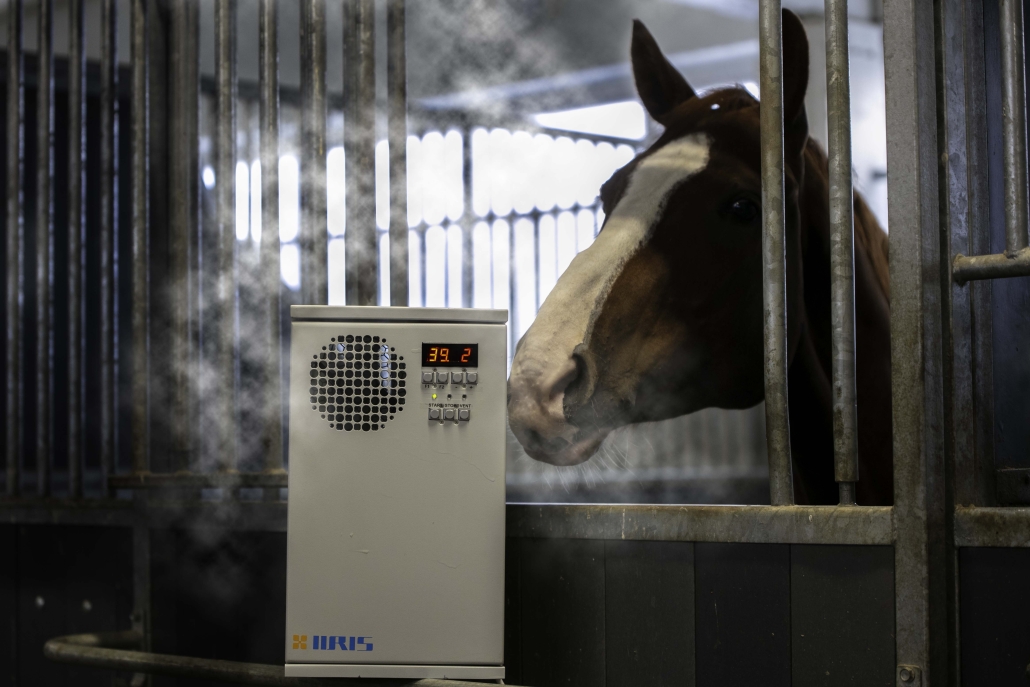
Dry salt therapy uses a halogenerator to mill pure salt into a fine aerosol and disperse it through a designated space. For horses, that space may be a purpose-built salt therapy stall, a compact equine cabin, or a larger area designed around safe entry, ventilation, and cleaning. The system should be selected as an operational installation, not as a decorative salt room.
What salt therapy for horses involves
Equine salt therapy is based on the controlled delivery of dry salt aerosol in a calm enclosed environment. Unlike a salt block, loose stable salt, or a wall finished with salt bricks, a halogenerator produces airborne salt particles. This distinction matters because the equipment, room layout, and maintenance requirements are built around aerosol distribution rather than visual appearance.
A typical session allows the horse to stand quietly in the treatment area while dry salt aerosol is introduced at a preset concentration and duration. Sessions should be planned around the horse’s temperament, daily workload, and comfort in enclosed spaces. For some horses, a short acclimation period is more suitable than starting with a full-length session.
Salt therapy is commonly positioned as a wellness and respiratory-comfort routine. It should not replace veterinary assessment, diagnosis, prescribed care, good ventilation, dust control, appropriate bedding, turnout, hydration, or sensible training management. Horses with existing concerns, sensitivity to new environments, or active health issues should be considered individually with guidance from an equine professional.
Why the installation matters more than the salt wall
A visually impressive salt finish may support the atmosphere of a wellness space, but it does not create dry salt aerosol on its own. The halogenerator is the working component. It determines how salt is milled, how aerosol is delivered, and how repeatable the session conditions can be.
For a horse installation, the room must also account for factors that are less demanding in a human salt room: the size of the animal, movement during entry and exit, moisture from breath and coat, airborne stable particles, and the need for thorough cleaning. A system that is technically capable but installed in an unsuitable environment will be difficult to operate consistently.
The most reliable projects begin with the actual use case. Is the facility serving one private horse, a rehabilitation-oriented stable, a boarding operation, or a commercial equine wellness service? Will the horse stand alone, and will a handler remain nearby? How many sessions are expected each day? These details guide room dimensions, equipment capacity, ventilation planning, surface selection, and the workflow around each session.
Designing a safe equine salt therapy space
The room should be quiet, easy to enter, and free of unnecessary visual stimulation. Horses need secure footing and enough room to stand naturally without feeling trapped. Doors, latches, wall finishes, electrical components, and aerosol outlets must all be protected from contact and designed for the realities of equine behavior.
Room surfaces and moisture control
Salt aerosol systems work best in dry, controlled conditions. Moisture can affect salt distribution, encourage residue buildup, and complicate cleaning. This makes moisture-resistant construction and well-managed ventilation essential.
Smooth, durable wall and floor surfaces are usually more practical than porous materials that retain dust or moisture. The floor must provide reliable traction while remaining simple to clean. Where salt décor is included, it should be treated as a secondary architectural feature, not as a substitute for suitable structural finishes.
A separate technical area for the halogenerator is often a smart design choice. It protects the equipment from direct contact, limits exposure to stable conditions, and gives staff straightforward access for service and salt refilling. The aerosol can then be introduced through a suitable duct or outlet designed for the room layout.
Airflow, access, and supervision
Airflow needs to support even aerosol distribution without creating a draft that unsettles the horse. The placement of supply points, exhaust, doors, and any ventilation equipment should be planned as one system. An uncontrolled fan or poorly placed vent can reduce consistency and make the space less comfortable.
Safe access is equally important. The horse should be able to enter and leave without sharp turns, slippery thresholds, or obstacles. A handler needs enough space to lead calmly, secure the horse if appropriate, and observe behavior. Cameras or viewing panels can add operational confidence in commercial settings, provided they do not create reflections or distractions.
Establishing an operating routine
A salt therapy room needs a written routine, particularly when more than one staff member operates it. Consistency protects the equipment, supports hygiene, and helps owners understand what their horse is experiencing.
Before each session, staff should check that the room is dry, clean, and clear of loose bedding, hay, feed, or grooming products. The horse should arrive calm and reasonably clean, with no avoidable sources of dust brought into the space. It is also sensible to confirm that the animal is comfortable entering before the halogenerator is activated.
During the session, the focus should remain on quiet observation. A horse that becomes distressed, paws persistently, sweats excessively, or attempts to leave should not be forced to continue. In many cases, better results come from adapting the duration and acclimation process rather than pushing the horse through an unfamiliar environment.
Afterward, allow the room to air and follow the cleaning procedure specified for the installation. Salt residue, dust, hair, and moisture should be addressed before they become an operational problem. Keep a simple record of sessions, equipment settings, cleaning, and any observations from handlers. This is especially useful for facilities offering the service to multiple clients.
Choosing equipment for the real workload
The right halogenerator depends on room volume, intended frequency of use, installation method, and the desired level of control. A small private setup has different needs from a professional equine center scheduling multiple daily sessions. Capacity should not be guessed from room appearance alone.
Ask practical questions before selecting a system: Can the unit deliver dry salt aerosol to the planned room size? Is it designed for repeated operation? How accessible are refilling and maintenance? What support is available if the installation is outside the manufacturer’s home market? Is there a clear warranty and service process?
Experienced manufacturers can help match equipment to the project rather than selling a one-size-fits-all unit. IIRIS Salt Therapy has developed dry salt aerosol systems and salt therapy environments for more than 25 years, with equipment supplied internationally for professional and private applications. For equine projects, that broader installation experience is valuable because the equipment must work within a space built for horses, not simply be placed in an existing stall.
Set realistic expectations for owners and clients
Salt therapy can be a meaningful addition to an equine wellness offer, but it works best when presented honestly. It is a controlled routine that may complement a horse’s overall management plan. It is not a shortcut around stable air quality, forage management, veterinary care, or the fundamentals of good horsemanship.
Commercial operators should be equally careful with their communication. Avoid broad promises or medical claims. Explain what the session involves, how long it lasts, how the horse is supervised, and what preparation is expected from the owner. Clear information builds trust and reduces the chance that clients mistake a wellness service for clinical treatment.
The strongest equine salt therapy installations are calm, clean, engineered for repeatable operation, and easy for staff to manage. When the room, aerosol equipment, horse handling process, and maintenance plan are designed together, salt therapy becomes a credible addition to a well-run equine facility rather than an attractive idea that is difficult to deliver.


