
Best Salt Cabin Features for Commercial Use
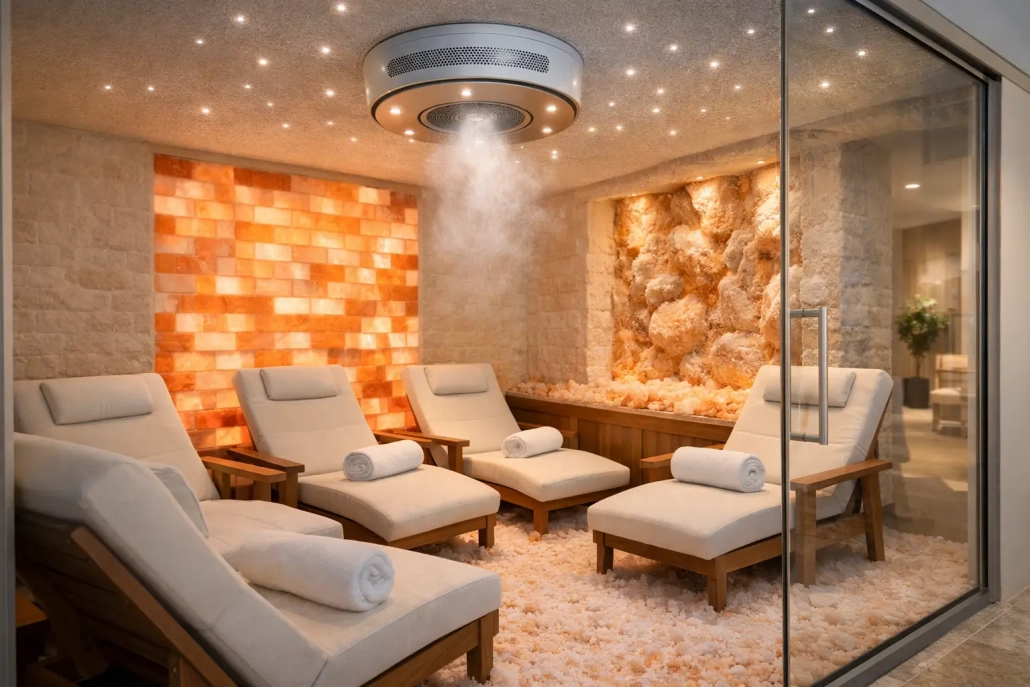
A salt cabin can become a high-value wellness service, but only when it delivers a consistent session without creating a daily maintenance burden for staff. The best salt cabin features are not simply decorative salt walls or ambient lighting. They are the engineering, materials, controls, and service details that allow an operator to run reliable dry salt aerosol sessions year after year.
For a spa, clinic, gym, or child-focused facility, the right cabin must fit the business model as well as the available floor space. A compact two-person cabin may support private appointments and premium scheduling. A larger installation may suit group sessions and higher throughput. In either case, the equipment behind the experience determines whether the cabin performs as intended.
Best Salt Cabin Features That Affect Performance
A professional dry salt aerosol generator
The halogenerator is the working center of a dry salt cabin. It grinds pharmaceutical-grade salt into a fine dry aerosol and introduces it into the cabin in controlled quantities. This is fundamentally different from placing salt blocks, loose salt, or salt lamps in a room. Salt décor can create an appealing atmosphere, but it does not provide active aerosolization.
For commercial use, look for a generator designed for the cabin volume and expected occupancy. The system should offer adjustable operating parameters so sessions can be adapted to the room size, intended program, and business schedule. An undersized generator may struggle to maintain a suitable aerosol environment, while an incorrectly specified system can lead to inconsistent operation and unnecessary service calls.
The generator should also be accessible for refilling, inspection, and routine cleaning. If staff must dismantle cabin panels or work around difficult installation details to reach core components, routine operation becomes slower and more error-prone.
A properly sealed, purpose-built enclosure
A salt cabin is not a standard sauna, relaxation room, or converted storage area. Dry salt aerosol needs a controlled interior environment. The enclosure should be constructed to reduce unwanted air leakage while still incorporating the ventilation approach required for the specific system.
Door quality matters more than it first appears. A well-fitted door, dependable seals, and durable hinges help maintain the cabin environment and withstand frequent opening during a commercial day. The same principle applies to cable penetrations, lighting fixtures, ventilation connections, and joints between wall panels.
Prefabricated cabins can be a practical choice where installation speed, predictable dimensions, and future relocation matter. A custom-built salt room can make better use of an unusual layout or support a larger capacity. The best option depends on the facility, not on a single universal format.
Interior surfaces made for salt exposure
Salt is attractive as a design material, but commercial interiors must also be cleanable, stable, and serviceable. Cabin finishes should tolerate repeated use and the presence of dry salt without becoming difficult to maintain. Seating, wall systems, flooring, and technical housings all need to be selected as part of one operating environment.
Natural salt panels, salt bricks, and illuminated design elements can create the visual identity guests expect from a salt therapy service. However, they should not obscure access to equipment or create fragile areas where regular cleaning is impractical. An effective design balances atmosphere with durability.
For operators, modular components offer an advantage. If a panel, light, seat surface, or technical element needs attention, it is preferable to service that component directly rather than disrupt the entire cabin.
Ventilation and humidity management
Dry salt therapy cabins require a dry operating environment. High humidity can affect salt handling, cabin surfaces, and the consistency of aerosol generation. This makes location assessment essential before installation. A cabin placed beside wet saunas, steam rooms, showers, or pool areas may require additional planning to control moisture transfer.
Ventilation must be designed around the cabin and its aerosol equipment, rather than added as an afterthought. The goal is to support fresh air exchange and practical turnover between sessions without undermining the intended cabin conditions during treatment time. The appropriate approach varies by cabin size, building layout, local codes, and the generator specification.
Ask the supplier how ventilation is incorporated, what site information is needed before installation, and which conditions may affect performance. Clear technical answers at this stage prevent costly changes later.
Features That Make Daily Operation Easier
A commercial salt cabin should be simple enough for trained front-desk or wellness staff to operate confidently. Complicated workflows increase the risk of missed steps, inconsistent sessions, and avoidable downtime.
Clear controls and repeatable session settings
A logical control interface helps staff start, monitor, and end sessions consistently. Depending on the system, useful controls may include session duration, aerosol output adjustment, lighting management, and operating status indicators. The point is not to add unnecessary complexity. It is to give the operator enough control to run the cabin according to an established protocol.
Preset programs can be useful for facilities with several staff members or extended opening hours. They reduce reliance on memory and make onboarding easier. At the same time, the operator should understand what each setting does and when it should be adjusted.
Seating, capacity, and guest comfort
Cabin capacity directly affects revenue planning. More seats can increase potential bookings, but only if the room remains comfortable, accessible, and easy to reset between sessions. A crowded cabin may weaken the guest experience even if it appears efficient on paper.
Consider the typical customer group. A wellness center may benefit from shared sessions, while a clinic or premium spa may prefer one- or two-person formats. Facilities serving children should consider supervision, durable seating, and a layout that allows staff to assist when needed.
Comfort features such as supportive seating, warm-toned lighting, and a calm interior finish contribute to the overall service. They should complement the core salt aerosol system, not substitute for it.
Easy cleaning and maintenance access
Every operator should understand the routine work required between sessions and over the longer term. Salt cabins need regular cleaning methods that suit the interior materials and do not introduce excess moisture. Floors, seats, door handles, and frequently touched surfaces should be easy to reach.
Maintenance access is equally important. The generator, electrical connections, filters where applicable, and ventilation components should be positioned so qualified personnel can inspect them without extensive disassembly. Request a clear maintenance schedule before making a purchase decision. This should identify routine staff tasks, recommended inspections, consumables, and the process for obtaining technical support.
Safety, Installation, and Long-Term Support
The best salt cabin features include the parts the guest rarely sees: sound electrical planning, safe lighting, suitable materials, secure installation, and a defined warranty process. For a commercial operator, these details protect the investment and help keep the service available to customers.
Before ordering, confirm the electrical requirements, installation access, room dimensions, floor loading considerations, ventilation needs, and delivery path. A cabin that fits on a floor plan may still be difficult to bring through a narrow corridor or install beneath a low ceiling. Early site planning avoids this kind of disruption.
Supplier experience matters when a project involves more than a standalone cabin. An operator may need a halogenerator, custom salt surfaces, technical planning, installation guidance, and support after commissioning. Working with a specialist manufacturer can reduce gaps between the equipment, the enclosure, and the practical needs of the site.
IIRIS Salt Therapy has supplied halotherapy equipment and project solutions internationally since 1998, with more than 2,000 halogenerators delivered. For buyers, that type of experience is valuable when selecting a system intended for daily commercial use, not occasional home use.
Choosing Features Around the Business Model
There is no single specification that is best for every location. A boutique spa may prioritize a refined two-person cabin with integrated salt wall lighting and appointment-based operation. A gym may need a durable, higher-capacity space that fits a fast turnover schedule. A new wellness business may value a prefabricated cabin that can be installed quickly, while a resort may require a custom salt room integrated into a larger thermal area.
Start with the intended number of sessions per day, average group size, available space, nearby humidity sources, staffing level, and desired guest experience. Then select the aerosol equipment and cabin configuration that support those conditions. This approach is more reliable than choosing by appearance alone.
A well-specified salt cabin should feel straightforward to operate from the first session. When the equipment, enclosure, and service plan are aligned, staff can focus on welcoming guests and building a salt therapy offering that earns repeat visits.


